

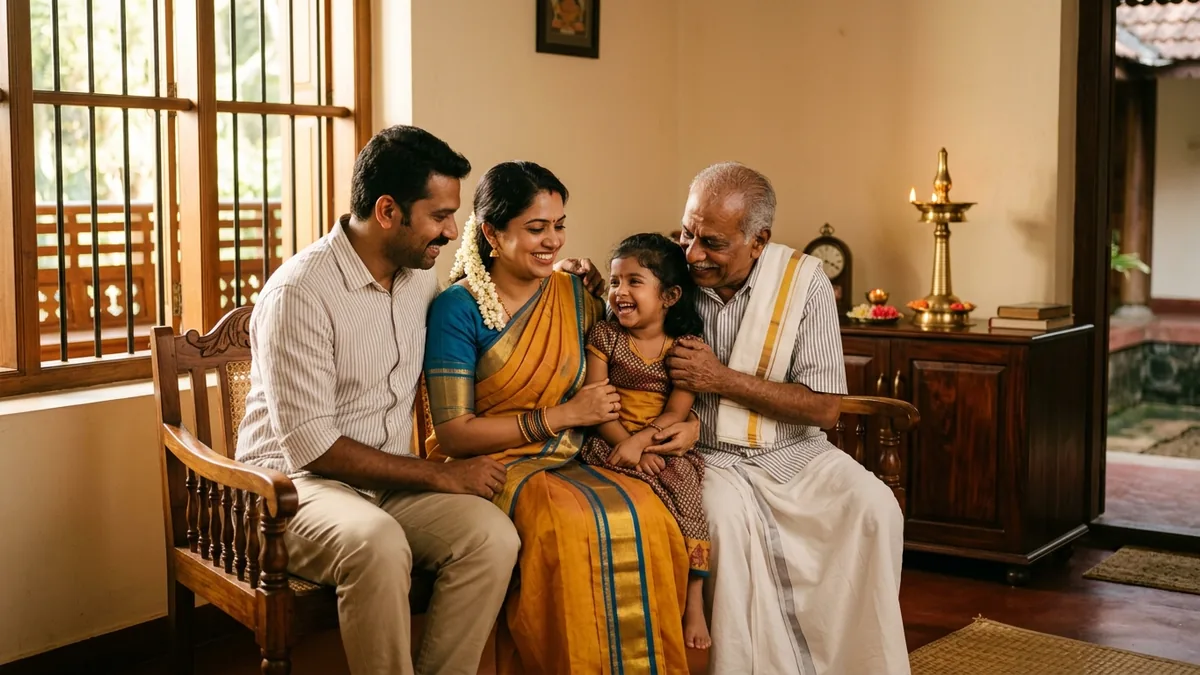
Many young people today hope to build wealth first and think about marriage and children later, if at all. They want to ride the wave of prosperity on their own, travelling light. It is an understandable plan. In my experience, though, life often works the other way round.
Over the years I have watched many lives closely, and a pattern keeps appearing. Prosperity rarely arrives in a straight line. It moves in cycles, and those cycles are set in motion by the events of our lives: the person we marry, the children we raise, the celebrations we share and the losses we live through. Understand the cycle, and you can learn to move with it.
Marriage opens the first door.
I have seen it again and again. Within a year or two of getting married, many people find their fortunes rising. Promotions come through, salaries and titles grow, and their financial life steadies and expands.
Why should this be? I believe it follows the law of giving and receiving. Marriage asks us to care for another person unconditionally, to place their needs beside our own. When we give in that way, life tends to give back, often in ways we did not expect. The responsibility that seems to weigh us down turns out to be the very thing that lifts us.
Children open the second door.
The next great turn of the cycle comes with children. Here I have noticed two distinct patterns. For some families, the months of pregnancy bring a burst of growth and good fortune, and things slow down a little after the child is born. For others, the pregnancy is a quiet, even difficult time, and prosperity arrives after the birth, often in abundance.
Either way, the arrival of a child seems to set the wheel turning. Today many couples choose not to have children, and some pour their love into pets instead. That is their choice to make. But in my view, they may be stepping away from one of life's most powerful engines of growth: the duty of nurturing a new life.
Good events attract good events.
Look closely and you will see that life's events fall into two groups. Positive events, such as a marriage, the birth of a child or moving into a new home, usually bring new possessions and assets with them: a house, a car, gold, savings for the future. Negative events, such as a death in the family, a long illness or a divorce, tend to drain resources and slow the cycle down. Illness brings medical bills, and a divorce often brings a long season of financial strain.
There is a corollary to this, and it is one our elders understood well. When you take part in other people's happy occasions, whether a wedding, a naming ceremony, a housewarming or simply helping a friend buy a new car, some of that prosperity flows into your own life. The heaviness of sorrowful events, in the same way, tends to cling to those around them. Perhaps that is why tradition asks us to bathe after attending a funeral before we return to our daily lives.
So accept the invitations. Show up for other people's celebrations with a full heart. Every time you share in someone else's joy, you step into the current of prosperity yourself.
Prosperity runs in families, and in nations.
The cycle does not stop at the individual. Within a family, good fortune tends to travel. When something good happens to a brother, something good soon follows for his sister, and the reverse is just as true. A wedding in one branch of the family is often followed by a birth or a new home in another.
Widen the lens and the same principle holds for a lineage, a community and even a country. When a nation is doing well, its people experience more happy events: more weddings, more new homes, more new ventures. When a nation struggles, troubled events multiply in the lives of its citizens. Our fortunes are woven together far more closely than we think.
Align with the right form of the divine.
In India, and across much of South and Southeast Asia, people worship many devatas. Put very simply, the divine works in three ways: creation, preservation and dissolution. The gentle, or saumya, forms such as Lakshmi and Vishnu are linked with preservation and abundance. The fierce, or ugra, forms, often shown with raised weapons and fearsome faces, are linked with dissolution and the destruction of obstacles.
In my understanding, these energies shape the lives of those who worship them. Worship of the gentle forms tends to support steady growth, family harmony and wealth. The fierce forms bring intensity, struggle and transformation, and those hoping for a calm rise in prosperity may find that path a hard one.
Yet the fierce forms have their place. Some professions are built on conflict. A lawyer wins a case only when another lawyer loses it. A police officer must overcome those who break the law. An athlete must defeat an opponent to lift the trophy. For people in such fields, success means prevailing over someone, and many have long turned to the fierce forms for courage and protection.
What matters most is alignment. One cannot follow the path of the fierce forms and still expect the gentle prosperity that flows from charity and happy events. Nor can one worship the gentle forms while living a life of combat. The two pull in opposite directions. Choose the form of worship that fits the life you are actually living.
Respect the body.
Prosperity needs a healthy home to live in, and that home is the body. Most of the successful people I know take good care of themselves. They respect their bodies, eat well and stay active, and they tend to enjoy good health and long lives, with only minor troubles along the way.
When people are struggling with money, by contrast, their health often suffers too. Neglect of the body, and of relationships, has a way of showing up both in the bank account and in the doctor's waiting room. If you want to stay in the prosperity cycle, look after the vehicle that carries you through it: eat good food, exercise regularly and keep a healthy balance between rest and activity.
Move with time, not against it.
There is one more dimension that Western thinking largely ignores: the quality of time itself. Time is the father, and direction is the mother. Vedic astrology holds that when Saturn and Jupiter transit the trine houses, the 1st, 5th and 9th, money tends to flow in, and when they move through the difficult houses, the 6th, 8th and 12th, it tends to flow out.
Many people today, influenced by Western ideas of manifestation, try to force results whatever the season. When their time is unfavourable, they push harder against it and only deepen their difficulties. The wiser course is to align with time and direction: to move boldly when time supports you, and to consolidate, prepare and wait when it does not.
Store the harvest.
Finally, use the good seasons well. When the cycle turns in your favour, put your gains into lasting assets such as a home or gold, which tend to grow in value as the cycle continues. A farmer stores grain after a good harvest. A wise person does the same with prosperity, so that the lean seasons do not undo the gains of the good ones.
Prosperity, then, is not only about how hard we work or how cleverly we invest. It flows through the life we build and the people we share it with. Marry, and care for your partner without conditions. Welcome children, if life gives them to you, as the blessings they are. Celebrate other people's joys as if they were your own. Respect your body, honour the rhythm of time, and choose a spiritual path that fits your life.
Do these things, and you will find yourself no longer chasing prosperity but walking alongside it. The wheel of fortune turns for everyone. The secret is to step onto it at the right moment, and to keep giving while it carries you forward.
Related Articles
Mind of a Champion
The habits of mind that set champions like Ilaiyaraaja, Vadivelu, A.R. Rahman, Rajinikanth and Novak Djokovic apart.
In Giving, You Shall Receive
What a millionaire sanyasi taught about karma, prosperity and why wealth begins with giving.
Ancestor Traditions & Dissolution
How world traditions care for their dead, teachings of pralaya, and perspectives on time.