

Thila Homam: Meaning, Benefits, Pitru Dosha & Vedic Ritual Guide
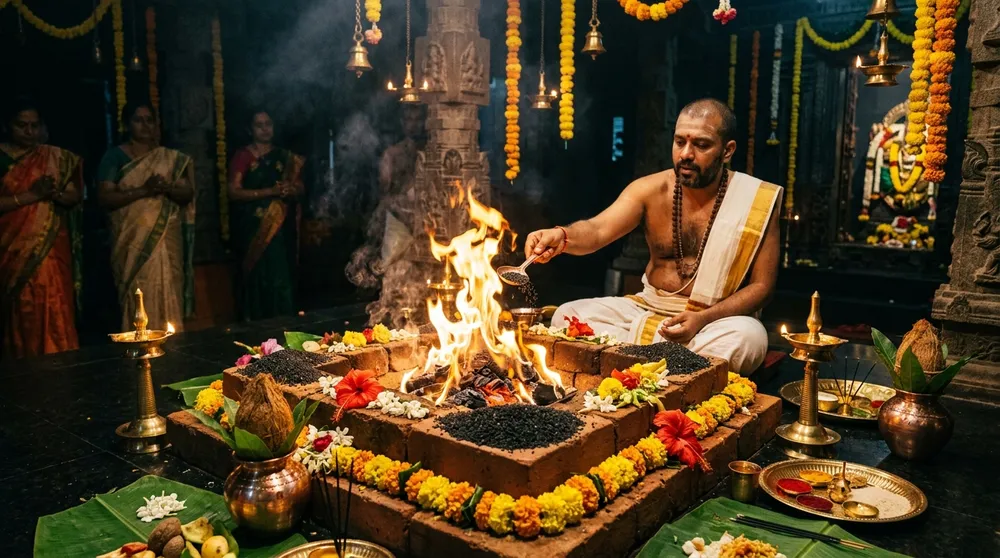
In Vedic ritual tradition, Thila Homam is one of the most revered fire sacrifices (Havan/Homam) dedicated to ancestral peace (Pitru Shanti). Through consecrated offerings of black sesame seeds into sacred Agni, this ceremony honors departed souls and addresses lineage afflictions.
What Is Thila Homam?
Thila Homam is a sacred Vedic fire ritual in which black sesame seeds (Thila) and prescribed herbal oblations are offered into consecrated fire (Agni) accompanied by Pitru Suktam mantras. It is traditionally performed to pray for the spiritual peace of departed ancestors, fulfill ancestral obligations (Pitru Rina), and serve as a Vedic astrological remedy for Pitru Dosha.
Why Are Black Sesame Seeds (Thila) Used in the Ritual?
In Sanskrit, Thila (or Tila) refers specifically to sesame seeds. In Vedic Shastras, black sesame seeds hold supreme spiritual significance for ancestral rites:
- Sacred to Pitrus: Black sesame is considered the designated sacred grain pleasing to Lord Yama and the ancestral realm (Pitru Loka).
- Karmic Purification: Vedic Shastras describe sesame seeds as possessing the subtle quality of absorbing negative karmic impressions and impurities during ancestral prayers.
- Agni as the Divine Messenger: When black sesame seeds mixed with pure cow ghee are offered into Agni, the fire deity acts as Havya-Vaha, conveying prayers directly to ancestral souls.
Traditional Purpose & Spiritual Benefits of Thila Homam
Vedic literature and astrological traditions highlight several spiritual reasons devotees perform Thila Homam:
🙏 Pitru Shanti
Offers prayers and spiritual relief to departed souls, especially those who may have had unfulfilled desires or sudden departures.
🛡️ Pitru Dosha Pariharam
Serves as a classical remedial fire sacrifice for planetary afflictions related to ancestral karma in a horoscope.
📜 Fulfilling Pitru Rina
Assists living descendants in honoring their moral debt of gratitude toward parents and lineage forebears.
🏡 Family Harmony
Traditional belief holds that pleasing ancestors removes subtle spiritual friction and fosters peace within the family lineage.
🪔 Spiritual Continuity
Preserves sacred Vedic customs and passes down cultural reverence across generations.
* Note: These benefits reflect traditional religious beliefs and astrological concepts; they are spiritual observances and should not be construed as guarantees for material, medical, or legal outcomes.
When Is Thila Homam Performed? Key Auspicious Occasions
While Thila Homam can be arranged on dates recommended by an astrologer based on birth chart analysis, specific lunar days are traditionally preferred:
| Occasion | Spiritual Significance in Tradition |
|---|---|
| Mahalaya Amavasya | The final day of Pitru Paksha; regarded as the most potent annual occasion for ancestral fire rituals. (Read our Mahalaya Amavasya 2026 Guide). |
| Monthly Amavasya (New Moon) | Each monthly New Moon Tithi is naturally aligned with ancestral remembrance and Tarpanam. |
| Aadi & Thai Amavasya | Prominent seasonal New Moon days in the Tamil/South Indian calendar dedicated to ancestral offerings. |
| Pitru Paksha Fortnight | The annual 16-day lunar period dedicated entirely to honoring departed ancestors. |
| Individual Shraddha / Death Anniversaries | Observed on the specific lunar Tithi corresponding to an ancestor's passing. |
Step-by-Step Vedic Procedure of Thila Homam
When conducted by qualified Vedic priests following Shastric protocols, Thila Homam follows a structured eight-step sequence:
- Vighneshwara Pooja: Invocatory prayer to Lord Ganesha to remove all obstacles and sanctify the venue.
- Maha Sankalpam: The formal declaration stating the devotee's Name, Gotram, Nakshatram, and specific ancestral prayer intentions.
- Kalasha Sthapana & Punyahavachanam: Consecration of holy water vessels and spiritual purification of ritual items.
- Agni Prathishta & Navagraha Homam: Invocation of the sacred fire deity and propitiation of planetary energies.
- Pitru Suktam & Yama Suktam Chanting: Recitation of Vedic hymns invoking divine grace for the elevation of departed souls.
- Pradhana Thila Ahuthi: Sacred offering of black sesame seeds, ghee, and samidha sticks into Agni.
- Poorna Ahuthi & Vasordhara: Concluding grand fire oblation symbolizing the complete fulfillment of the sacrifice.
- Maha Deeparadhana & Ashirvadam: Final Aarti and chanting of Vedic benedictions by the presiding priests.
Thila Homam Ritual Packages & Booking
Select your preferred Thila Homam ritual option below. All rituals are performed by learned Vedic priests at Swami Narayanan Temple with personalized Sankalpam in your Name, Gotram, and Nakshatram.
4 Priest Thila Homam
Comprehensive ancestral fire ritual performed by 4 experienced Vedic priests with complete Sankalpam, Ganapathi Homam, and Poorna Ahuthi.
Individual & Direct Family Ancestral Remembrance
- ✓ 4 Qualified Vedic Priests
- ✓ Personalized Sankalpam (Name, Gotram, Nakshatram)
- ✓ Ganapathi & Main Thila Ahuthi Offerings
- ✓ Shodasha Upachara & Ashtottara Chanting
- ✓ Complete Poorna Ahuthi & Ashirvadam
8 Priest Thila Homam
Elaborate Maha ancestral fire ritual conducted by 8 Vedic priests with extensive Veda Chanting, additional Japa oblations, and lineage prayers.
Multiple Generations & Deep Pitru Dosha Pariharam
- ✓ 8 Senior Vedic Priests
- ✓ Expanded Personalized Sankalpam & Lineage Prayers
- ✓ Multi-Recitation Thila Ahuthi & Veda Parayanam
- ✓ Extended Pitru Suktam & Yama Suktam Chanting
- ✓ Grand Poorna Ahuthi & Ashirvadam
Sankalpam Requirements: What Devotees Need to Provide
To ensure the ritual is personalized for your lineage, the following information is required during booking:
- Karta's Full Name: The primary individual sponsoring or performing the ritual.
- Gotram: Spiritual lineage/clan name (if unknown, priests use a standard lineage such as Shiva Gotram or Kashyapa Gotram).
- Janma Nakshatram & Rashi: Birth star and Moon sign of the primary devotee.
- Names of Departed Ancestors: Details of deceased parents or grandparents where available.
- Current Location: City and state of residence for geographical Sankalpam coordinates.
Role Distinction: Astrologer K.B. Gopalakrishnan at Sathyaprema provides diagnostic birth chart analysis. All rituals are performed by qualified priests at Swami Narayanan Temple.
Need Astrological Guidance or Ready to Perform Thila Homam?
Astrological Evaluation (Sathyaprema)
Astrologer K.B. Gopalakrishnan analyzes birth charts to determine if Pitru Dosha is present and whether Thila Homam is an appropriate remedy for your horoscope.
Consult AstrologerRitual Performance (Swami Narayanan Temple)
The physical fire rituals and poojas are conducted at Swami Narayanan Temple by authentic Vedic priests with personalized Sankalpam and remote updates.
Book at Temple WebsiteFrequently Asked Questions About Thila Homam
Sathyaprema by Astrologer K.B. Gopalakrishnan offers authentic Vedic, Nadi, Prashna astrology consultations and remedies.
Copyright © sathyaprema designed by Jigitals.