Thila Homam – Meaning, Pitru Dosha, Benefits & Vedic Ritual Guide

Thila Homam – Meaning, Pitru Dosha, Benefits & Vedic Ritual Guide

Sacred Vedic Ancestral Remedy & Astrological Pariharam

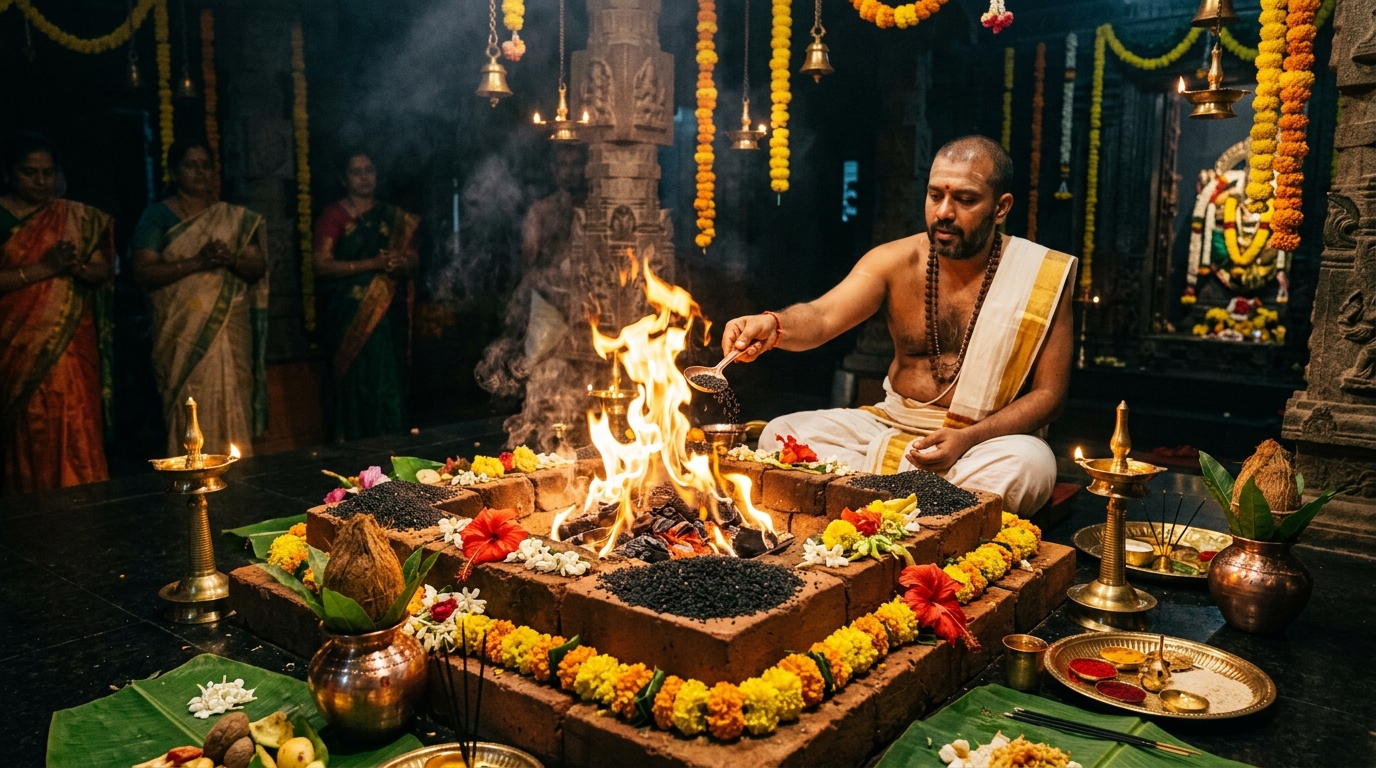
Thila Homam is one of the most venerated Vedic fire rituals dedicated to honoring departed ancestors (Pitrus), granting eternal peace to unfulfilled souls, and resolving deep-rooted karmic afflictions known as Pitru Dosha. Grounded in ancient Shastras, this ritual bridges the earthly realm with ancestral consciousness through sacred black sesame offerings into Agni.

Sacred Thila Homam Vedic Fire Ritual with Black Sesame Offerings

Thila Homam Ritual Packages & Booking

Select your preferred Thila Homam ritual option below. All rituals are performed by learned Vedic priests with personalized Sankalpam in your Name, Gotram, and Nakshatram.

Vedic Ritual Package

4 Priest Thila Homam

Comprehensive ancestral fire ritual performed by 4 experienced Vedic priests with complete Sankalpam, Ganapathi Homam, and Poorna Ahuthi.

Suitable for:

Individual & Direct Family Ancestral Remembrance

  • 4 Qualified Vedic Priests
  • Personalized Sankalpam (Name, Gotram, Nakshatram)
  • Ganapathi & Main Thila Ahuthi Offerings
  • Shodasha Upachara & Ashtottara Chanting
  • Complete Poorna Ahuthi & Ashirvadam
Grand Maha Ritual

8 Priest Thila Homam

Elaborate Maha ancestral fire ritual conducted by 8 Vedic priests with extensive Veda Chanting, additional Japa oblations, and lineage purification.

Recommended for:

Multiple Generations & Deep Pitru Dosha Pariharam

  • 8 Senior Vedic Priests
  • Expanded Personalized Sankalpam & Lineage Prayers
  • Multi-Recitation Thila Ahuthi & Veda Parayanam
  • Extended Pitru Suktam & Yama Suktam Chanting
  • Grand Poorna Ahuthi & Ashirvadam

Quick Answer: What Is Thila Homam?

Thila Homam is a specialized Vedic ancestral fire ritual performed using black sesame seeds (Thila) as the primary sacred offering into Agni. It is designed to offer spiritual peace (Pitru Shanti) to departed souls, fulfill unaddressed ancestral obligations (Pitru Rina), and alleviate ancestral karmic afflictions (Pitru Dosha) in a family horoscope. Devotees can understand what Thila Homam means and explore its deep scriptural background.

Key Takeaways of Thila Homam

🔥 Black Sesame Fire Offering

Uses consecrated black sesame seeds offered into sacred fire to transmit subtle energy to departed ancestors.

🙏 Sacred Ancestor Remembrance

Expresses deep reverence and gratitude to deceased parents, grandparents, and forgotten lineage members.

✨ Pitru Shanti & Liberation

Grants spiritual elevation and peace to restless or unsatisfied ancestral souls struggling in subtle realms.

🔮 Pitru Dosha Pariharam

Serves as an authentic Vedic astrological remedy for horoscopes afflicted by Sun-Rahu or 9th house doshas.

📜 Personalized Sankalpam

Performed with specific devotee Name, Gotram, and Nakshatram to channel divine blessings directly to the family lineage.

🗓️ Optimal Ancestral Tithis

Conducted during monthly Amavasya, Aadi Amavasya, Thai Amavasya, Pitru Paksha, or Mahalaya Amavasya.

Meaning of Thila Homam

In the Sanskrit tradition, Thila refers to sesame seeds (specifically black sesame), while Homam signifies a consecrated Vedic fire sacrifice. Therefore, Thila Homam is a divine ritual in which black sesame seeds are sanctified with Vedic mantras and offered into the sacred sacrificial fire (Agni).

According to the Garuda Purana and Dharma Shastras, Agni acts as Havyavahana (the divine carrier of offerings), delivering the subtle essence of the black sesame directly to the Pitrus (ancestors) in the higher realm of Pitru Loka. To dive deeper into the scriptural origin and traditional meaning of this ritual, you can learn more about Thila Homam from our detailed temple cluster guide.

Why Is Black Sesame Used in Thila Homam?

Black sesame seeds hold a unique vibrational frequency in Vedic ritualism. Unlike white sesame seeds which are often used for Deva worship, black sesame seeds possess the divine capacity to absorb subtle karmic impurities, negative energies, and unfulfilled desires of ancestral souls.

In Vedic lore, black sesame seeds originated from the sweat of Lord Vishnu during His cosmic penance, making them sacred to Lord Yama (the deity of justice and death) and Lord Shani (Saturn). Discover the complete esoteric reasons why black sesame is used in Thila Homam to appreciate the profound science behind this offering.

Spiritual Significance of Thila Homam

The spiritual significance of Thila Homam transcends routine ritual practice. Every human being is born with three fundamental spiritual debts: Deva Rina (debt to the Divine), Rishi Rina (debt to the Sages), and Pitru Rina (debt to Ancestors). Performing Thila Homam fulfills Pitru Rina by honoring those who gave us life, bloodline, and physical form.

When ancestors pass away with unfulfilled earthly desires, sudden trauma, or without receiving proper Shraddha rites, their subtle bodies remain in an unsatisfied state. Thila Homam provides them spiritual nourishment, releasing them from limbo and transforming their distress into protective blessings for their living descendants.

Why Is Thila Homam Performed?

Thila Homam is performed for both spiritual duty and specific practical life challenges. Families traditionally perform this ritual to:

  • Provide peace and elevation to souls of deceased relatives, parents, and ancestors.
  • Resolve persistent, unexplained family disputes, obstacles in marriage, or delay in childbirth.
  • Neutralize ancestral karmic curses or afflictions diagnosed in the birth chart.
  • Perform ancestral rites when traditional Tithi dates or funeral ceremonies were missed in the past.
  • Ensure continuity, prosperity, and spiritual protection for future generations.

Benefits of Thila Homam

Traditional and faith-based benefits experienced by families who perform Thila Homam with devotion and authentic Vedic guidance.

🌿

Pitru Shanti & Soul Elevation

Grants peace, satisfaction, and spiritual progression to departed souls in subtle ancestral realms.

👨‍👩‍👧‍👦

Family Lineage Connection

Strengthens bloodline continuity, family unity, and mutual understanding among living family members.

Pitru Dosha Pariharam

Mitigates astrological afflictions caused by afflicted 9th house, Sun, Rahu, or Saturn in the horoscope.

🛡️

Removal of Lineage Obstacles

Helps clear recurring delays in marriage, career stagnation, and unexplainable financial blockages.

👶

Childbirth & Progeny Blessings

Removes subtle karmic impediments to conceiving children and protects the health of future progeny.

🕊️

Mental Peace & Harmony

Fosters emotional calmness, eliminates unexplained guilt, and brings peace of mind to the family home.

Thila Homam & Pitru Dosha in Vedic Astrology

In Jyotish (Vedic Astrology), the 9th House represents Dharma, luck, divine grace, and Pitru Sthana (ancestors). The Sun is the Pitru Karaka (significator of father and ancestors). When the 9th house, 9th lord, or the Sun is afflicted by malefic planets—especially Rahu, Ketu, or Saturn—it forms Pitru Dosha in the birth chart.

Key planetary combinations indicating Pitru Dosha include:

  • Sun conjunct Rahu or Ketu in any house, especially the 1st, 5th, or 9th house.
  • Saturn conjunct Sun or 9th Lord creating affliction to ancestral karma.
  • 9th House occupied by Rahu or Ketu without benefic aspects from Jupiter.
  • 5th House affliction indicating ancestral karmic blockages affecting children.
Responsible Astrological Disclaimer: Pitru Dosha should NOT automatically be blamed for every problem or failure in life. A genuine astrological diagnosis requires a careful evaluation of the entire Janma Kundali, Dasha-Bhukti periods, and planetary strengths by an experienced astrologer before recommending remedies.

What Is Pitru Rina?

Pitru Rina literally translates to "ancestral debt." It is the sacred spiritual obligation that every human inherits upon birth toward their departed ancestors. In Vedic philosophy, our physical body, mind, talent, and lineage are gifts from our forebears. Pitru Rina is discharged through daily gratitude, annual Tithi Shraddha, Tarpana, and ritual remedies like Thila Homam. You can explore deeper details about Pitru Rina and ancestral obligations in our dedicated Pitru Dosha cluster page.

When May an Astrologer Recommend Thila Homam?

At Sathyaprema, Astrologer K.B. Gopalakrishnan evaluates individual horoscopes to determine if Thila Homam is specifically required. An astrologer may recommend this ritual when:

  • A horoscope shows severe Sun-Rahu or 9th house afflictions coinciding with a difficult Dasha period.
  • The individual experiences persistent dreams of deceased elders requesting water or food.
  • Unexplained loss of wealth, repeated miscarriages, or marital disharmony persists despite other remedies.
  • Family members missed mandatory funeral rites or annual Shraddha ceremonies due to unavoidable circumstances.

When Is Thila Homam Performed?

Thila Homam yields maximum spiritual benefit when aligned with specific sacred lunar days and ancestral Tithis.

🌑 Monthly Amavasya

The New Moon day of every month is naturally aligned with Pitru worship across Vedic traditions.

🌅 Aadi Amavasya

Occurring in the Tamil month of Aadi (July–August), this is one of the most auspicious days for ancestor rituals.

🌾 Thai Amavasya

Falling in the Tamil month of Thai (January–February), marking Uttarayana ancestral offerings.

🍂 Pitru Paksha

The 15-day sacred dark fortnight dedicated entirely to remembering and honoring forebears.

👑 Mahalaya Amavasya

The culmination day of Pitru Paksha—considered the supreme day for ancestral fire rituals.

📅 Annual Ancestor Tithi

The exact annual lunar anniversary date of a deceased parent or ancestor.

Thila Homam on Amavasya

Amavasya (New Moon) is governed by the Moon and Sun residing in the same sign, creating a doorway between physical reality and Pitru Loka. Performing Thila Homam on monthly Amavasya days allows ancestral prayers to reach the Pitrus easily. In particular, observing Aadi Amavasya and Thila Homam holds special spiritual significance for devotees in South India.

Thila Homam During Pitru Paksha

Pitru Paksha is a sacred 15-day period in the Hindu calendar (Bhadrapada month) when ancestral spirits descend close to the Earth realm to accept offerings from their lineage. Performing Thila Homam during Pitru Paksha grants immensely amplified spiritual merits and releases complex ancestral karmas.

Mahalaya Amavasya & Thila Homam

Mahalaya Amavasya is the final and most powerful day of Pitru Paksha. On this single day, offerings can be made even for unknown, forgotten, or childless ancestors across all generations. Conducting Thila Homam on Mahalaya Amavasya satisfies the entire ancestral chain.

Thila Homam Procedure Overview

The complete Thila Homam is conducted by authentic Vedic priests following Agama and Shastra guidelines. Here is a concise 7-step overview of how the ritual is structured:

1

Sankalpam

Sacred solemn vow stating devotee Name, Gotram, Nakshatram, ancestral names, and ritual intent.

2

Shodasha Upachara Pooja

Preliminary deity invocation with 16 sacred offerings to invoke divine grace.

3

Ashtottara & Archana

Chanting 108 holy names of Lord Agni, Lord Yama, and Lord Maha Vishnu for spiritual protection.

4

Ganapathi Homam

Sacred fire offering to Lord Ganesha to remove all obstacles prior to the main ancestral ritual.

5

Main Thila Ahuthi Offerings

The core ritual where consecrated black sesame seeds mixed with ghee are offered into Agni with Pitru Suktam mantras.

6

Poorna Ahuthi

Final grand oblation of silk cloth, medicinal herbs, and sacred materials completing the fire sacrifice.

7

Final Ashirvadam & Prayers

Final priest blessings, sacred Bhasma (vibhuti), and ancestral prayer completion.

What Is Sankalpam?

Sankalpam is the cornerstone of any Vedic ritual. It is the conscious declaration of purpose made before the deities and Agni. During Sankalpam, the devotee's Name, Gotram (lineage archetype), Janma Nakshatram (birth star), current location, time (Tithi, Vara, Nakshatra), and names of deceased family ancestors are recited. This precise metaphysical addressing ensures that the spiritual benefits of the Homam are delivered directly to the intended lineage. You can arrange personalized Thila Homam with authentic Sankalpam at Swami Narayanan Temple.

Who Can Perform or Arrange Thila Homam?

Thila Homam can be arranged by sons, daughters, spouses, or close family members who wish to express gratitude or resolve ancestral afflictions for their family lineage. Anyone who seeks peace for their deceased parents, grandparents, or ancestors suffering from unfulfilled rites can initiate this ritual.

Can Women Participate in Thila Homam?

Yes. Based on authentic temple guidelines and Vedic traditions, women can fully participate in Thila Homam, initiate Sankalpam in their name, and offer prayers for both their parental lineage and their spouse's family lineage with complete devotion and respect.

Can NRIs Arrange Thila Homam Remotely?

Yes. Non-Resident Indians (NRIs) and devotees residing across the globe who cannot travel physically can arrange remote Thila Homam. Vedic priests at Swami Narayanan Temple perform the ritual live with personalized Sankalpam using the devotee's Name, Gotram, and Nakshatram. You can explore online Thila Homam ritual services for international devotees.

Why Sathyaprema for Astrological Guidance?

Under the expert guidance of renowned astrologer K.B. Gopalakrishnan (with over 40+ years of experience in Vedic, Nadi, and Prashna astrology), Sathyaprema provides authentic horoscope diagnostic analysis before recommending ritual remedies. Rather than prescribing generic homams, Astrologer Gopalakrishnan evaluates whether Pitru Dosha is genuinely present, determines the exact severity, and advises the most effective remedies tailored to your unique astrological chart.

Need Guidance or Ready for the Ritual?

Not Sure Which Pariharam Is Appropriate?

Get your birth chart individually analyzed by Astrologer K.B. Gopalakrishnan to verify if Pitru Dosha is present before booking any ritual.

Consult Sathyaprema

Already Decided to Perform Thila Homam?

Book and perform personalized Thila Homam with authentic Vedic priests at Swami Narayanan Temple online or in-person.

View Pricing & Book Ritual

Frequently Asked Questions About Thila Homam

Thila Homam is a Vedic fire ritual performed using black sesame seeds (Thila) as the main offering into Agni. It is performed to grant spiritual peace (Pitru Shanti) to departed ancestors, fulfill unaddressed ancestral obligations (Pitru Rina), and remedy Pitru Dosha in a birth chart.
Regular Tithi Shraddha is an annual remembrance ritual performed on the specific death anniversary date. Thila Homam is a special fire-based Pariharam specifically aimed at resolving karmic afflictions, untimely ancestral deaths, or missed rituals across multiple generations.
Black sesame seeds possess unique subtle energy absorption qualities that absorb karmic impurities and unfulfilled desires of ancestors. They are sacred to Lord Yama and Lord Saturn, making them the ideal offering for ancestral liberation.
Traditional indicators may include unexplained delays in marriage, chronic health issues, constant financial instability, difficulty conceiving children, or frequent disharmony among family members despite sincere effort.
Yes. An experienced Vedic astrologer evaluates your Janma Kundali for afflictions to the Sun, 9th house, 9th lord, or Rahu/Ketu placements to confirm if Thila Homam is the appropriate Pariharam for your situation.
Monthly Amavasya (New Moon) days, Aadi Amavasya, Thai Amavasya, Pitru Paksha, Mahalaya Amavasya, or the individual's ancestral death anniversary (Tithi) are considered the most effective times.
Yes, women can sponsor, participate in, and initiate Sankalpam for Thila Homam to offer prayers for their ancestors or family lineage according to temple traditions.
NRIs can book Thila Homam online. Vedic priests conduct the sacred ritual in the temple on the chosen date, taking Sankalpam in the devotee's Name, Gotram, and Nakshatram.
You need to provide your full Name, Gotram, Janma Nakshatram (birth star), current city of residence, and names of deceased family ancestors (if known).
A comprehensive Thila Homam typically takes around 1.5 to 2.5 hours, including Sankalpam, preliminary deity worship, Ganapathi Homam, main Thila offerings, and Poorna Ahuthi.

Explore Our Detailed Thila Homam Guides

Dive deeper into specific topics across our verified temple knowledge cluster pages.

What Is Thila Homam?

Meaning, significance, sesame offerings, and ancient ancestral traditions explained in detail.

Benefits of Thila Homam

Understand the traditional spiritual benefits, ancestral blessings, and lineage harmony.

Thila Homam & Pitru Dosha

Understand Pitru Rina, ancestral obligations, astrological signs, and traditional Pariharam.

Thila Homam Procedure

Explore the complete step-by-step Vedic ritual process from Sankalpam to Poorna Ahuthi.

Mahalaya Amavasya Rituals

Learn about performing Thila Homam during Pitru Paksha and Mahalaya Amavasya.

Thila Homam FAQ Hub

Explore 50+ detailed answers to common questions about dates, Gotram, women, and NRIs.

Aadi Amavasya Significance

Understand the spiritual importance of Aadi Amavasya for ancestral remembrance and prayers.